





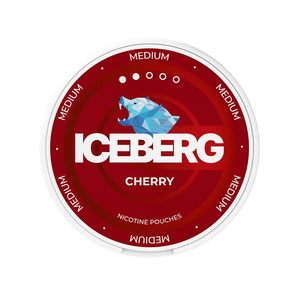
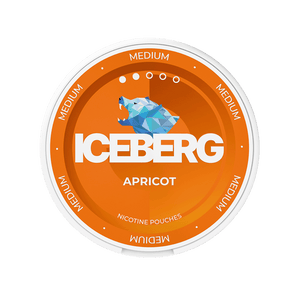

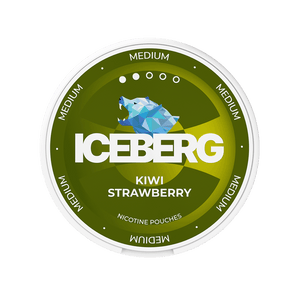





Nicotine is either extracted from tobacco plants or synthesized entirely chemically. During extraction, the nicotine is extracted from the leaves using various methods - such as acid-base extraction or supercritical liquid extraction with CO₂
Nicotine is the active ingredient shared by cigarettes, Snus and nicotine pouches. But where does it actually come from? Is it extracted from the tobacco plant, or can it also be produced completely without tobacco? And does its origin make any difference to how nicotine works in the body? In this article, you’ll learn what methods of nicotine production exist, how they differ, and what that means for your consumption.
Where does nicotine naturally come from? The tobacco plant as a source
Nicotine is a naturally occurring alkaloid – in other words, a nitrogen-containing organic compound produced by certain plants. By far the most important natural source is the tobacco plant (Nicotiana tabacum). It belongs to the nightshade family (Solanaceae), which also includes tomatoes, potatoes, peppers, and aubergines. This almost automatically raises the question: does your vegetables contain nicotine too? You’ll find the answer later in this article.
But back to the tobacco plant: where does it actually come from? Originally, like the potato and the tomato, the tobacco plant comes from the Americas. It was cultivated there long before the arrival of Europeans and used in both ritual and medicinal contexts. From there, it spread around the world so extensively that tobacco is now commercially grown in numerous countries. But how did the tobacco plant become so popular? Surprisingly, the answer initially has little to do with us humans and much more to do with its effect on insects. Nicotine is formed in the roots of the tobacco plant and transported from there mainly to the leaves – exactly where predators attack. Nicotine is toxic to many insects, which is why it was even used as a pesticide for a long time. Nicotine is part of the plant’s chemical defense system, not a substance the plant produces for human consumption. In larger amounts, it can be just as toxic to humans and lead to nicotine poisoning.
Where is nicotine produced in the plant?
Why is nicotine stored specifically in the leaves if the plant actually produces it in the roots? The answer lies in the tobacco plant’s natural defense system. The biosynthesis of nicotine, meaning the formation of the substance itself, begins in the roots. From there, it travels through the vascular tissue, more precisely with the water flow of the xylem, into the above-ground parts of the plant. In the leaves, it is ultimately stored in the cell vacuoles – small cell compartments surrounded by a membrane. There, it can fulfill its function as a natural defense against feeding by certain insects.2 How much nicotine a tobacco plant produces depends, among other things, on the variety and the growing conditions. In conventional tobacco varieties, the Nicotine content is usually between 1% and 5% of the dry weight. Processed cigarette tobacco usually contains around 1% to 2%. One reason for this is that manufacturers blend different tobacco varieties and harvests to achieve specific tobacco characteristics.3
The nicotine molecule: small, but effective
Regardless of which type of tobacco it occurs in, nicotine is the same molecule. Chemically, it consists of two connected ring systems: a pyridine ring and a pyrrolidine ring. Its molecular formula is C₁₀H₁₄N₂.1 This molecular structure is crucial to how nicotine works in the body. After absorption, the molecule can bind to what are known as nicotinic acetylcholine receptors. These receptors are found, among other places, on nerve cells in the brain and normally respond to the body’s own messenger substance acetylcholine. When nicotine binds to them, it triggers nerve signals that, among other effects, stimulate the release of dopamine in the brain’s reward system. To learn more about the chemical processes behind this in detail and what effects dopamine release can have on your body, see the article Nicotine and its side effects.
Nicotine in other foods
If tomatoes, potatoes, and eggplants belong to the same plant family as tobacco, do they also produce nicotine? In fact, these plants do contain small amounts of nicotine as well — an Austrian study systematically recorded the concentrations in various nightshade plants.4 However, the detected amounts are so minimal that, according to this study, even regular consumption does not result in nicotine intake comparable to tobacco use4 — a direct comparison with tobacco products would be misleading, since concentration and route of administration are crucial.
You can learn exactly what nicotine is, where it comes from, and how it works in the body in the article Nicotine: What it is, where it comes from, and how it works.
Extracting nicotine from the tobacco plant — the most important methods
Nicotine is therefore closely linked to tobacco — but it is not the same thing. In the plant, it is just one of many constituents. To use it as a standalone raw material, it first has to be extracted from the leaves. But how exactly does nicotine actually get out of the tobacco leaf? To answer this question, it helps to look at the two established methods used in tobacco extraction — and a third that is still being researched. Depending on the method, different chemical and physical processes are used to extract nicotine from the plant material and then purify it further. Various extraction methods have been developed to obtain nicotine from tobacco. They differ, among other things, in which solvents or auxiliary substances are used, how complex the process is, and how selectively the nicotine can be separated from other plant components. Some of these methods have been known for decades, while others are being scientifically investigated mainly as modern or alternative approaches.

From leaf to vessel: during extraction, nicotine is separated from the plant material using solvents or auxiliary substances and then further processed.
1. Classic method: acid-base extraction
One of the classic methods for extracting nicotine from tobacco is so-called acid-base extraction. Put simply, the tobacco material is first treated with an alkaline solution. This releases the nicotine contained in the tobacco from the plant material so it can then be selectively separated from the mixture and purified.5
The advantage: although the method is comparatively complex, it delivers an extract with a high nicotine content. Studies show that while fewer plant compounds are extracted overall than with simple maceration, meaning simply soaking the tobacco in solvents, the resulting extract is significantly more concentrated in nicotine.5 In short: acid-base extraction is not a particularly simple method, but it is a scientifically well-documented way,5 to selectively extract nicotine from tobacco and then purify it further.
2. Supercritical fluid extraction (CO₂)
A somewhat more technical method works with carbon dioxide (CO₂). For this, CO₂ is brought into a so-called supercritical state under high pressure and at a specific temperature. In this state, it behaves neither entirely like a liquid nor like a gas - and that is exactly what makes it interesting as a solvent.
In this state, the CO₂ can dissolve certain substances from the tobacco material, including nicotine. The CO₂ can then be removed again, leaving behind the extracted substance. The principle became well known in the 1970s through the decaffeination of coffee; around the same time, it was also patented for the extraction of nicotine from tobacco and has since been further developed and optimized.6 Instead of using conventional organic solvents as in acid-base extraction, CO₂ is used here. This makes the method more technically demanding, but it enables targeted extraction and then comparatively clean separation of the nicotine.6
3. Ultrasonic process - the new method
Another method, though one that has not yet become established in tobacco processing, is ultrasound-assisted extraction (UAE). This uses high-frequency sound waves to influence the structure of the plant material. Put simply, cell structures can be broken up, making the compounds they contain more accessible to the solvent being used. This can make the extraction faster and more efficient. This process has already been studied for tobacco as well: scientific papers show that various components can be extracted from tobacco leaves and tobacco by-products using ultrasound.7, 20 Factors such as the solvent, temperature, extraction time, and the ratio of tobacco material to solvent play an important role here.20 Ultrasound can support and accelerate the extraction. For the industrial production of pure nicotine, however, this process has so far not been a common standard method.
Snuzone Newsletter
Newsletter
Do you like this content? Then sign up for our free NL!
By registering, you accept the privacy policy
Synthetic nicotine – production without the tobacco plant
This brings us back to the question from the introduction: does nicotine even have to come from the plant? If it is a clearly defined molecule with a known formula, it makes sense to assume that it can also be produced entirely synthetically in the laboratory. No tobacco plant is needed for this – and in the end, the finished nicotine molecule can still be exactly the same as the one obtained from tobacco. That is why synthetic nicotine is often also referred to as tobacco-free nicotine, or Tobacco-Free Nicotine (TFN) in English.

Without the plant, but with the same result: synthetic nicotine is built up from chemical starting materials through several reaction steps. In the end, the result is the same molecule – C₁₀H₁₄N₂.
How is synthetic nicotine produced?
To produce nicotine artificially, other chemical starting materials are used first. One possible starting point, for example, is esters of nicotinic acid (niacin, vitamin B3). Through several chemical reaction steps, the nicotine molecule is then ultimately built from these. Corresponding synthesis processes are described, among other places, in patents.9 In the end, the result is a molecule with the same molecular formula as nicotine from the tobacco plant: C₁₀H₁₄N₂. The basic structure of the molecule is also identical – among other things, it contains a pyridine ring and a pyrrolidine ring.1
However, there is one special feature of synthetic nicotine that is easily overlooked: The nicotine molecule can occur in two mirror-image variants. In chemistry, these are referred to as (S)-nicotine and (R)-nicotine. Put simply, you can imagine the two forms like the left and right hand: they consist of the same building blocks, but are arranged differently in space. This quickly raises the question of which of the two forms is produced in the tobacco plant. There, you find almost exclusively (S)-nicotine. The proportion of the (R) form is typically less than 1.2 percent.8 In laboratory production, by contrast, it depends on the chosen synthesis route which form is produced. Modern methods can specifically generate predominantly or almost exclusively (S)-nicotine. In other synthesis routes, a mixture of (S)- and (R)-nicotine in a 1:1 ratio is formed first – a so-called racemate.8
But why is that relevant? This is not just a chemical detail. The two forms do not behave entirely the same way in the body. (R)-nicotine binds more weakly to certain nicotinic receptors than (S)-nicotine. However, how different proportions of the two forms affect the impact and health effects has not yet been fully clarified.8
So when someone speaks of “synthetic nicotine,” they are initially describing only the origin of the nicotine – not automatically its exact composition. Depending on the manufacturing process, it may be almost pure (S)-nicotine or a mixture of both forms. You can read more about how the three forms of nicotine in nicotine pouches influence the effect profile in our separate article.
Is synthetic nicotine more expensive?
That question comes up quickly when you keep in mind the technical effort involved in producing it in a lab. At least in the years after the introduction of such products, synthetic nicotine was therefore also significantly more expensive than nicotine from tobacco. An analysis of US wholesale prices from 2021, for example, found a price around four times higher than for tobacco-based nicotine.9
However, how large this price difference is today cannot be reliably determined from publicly available data. That earlier price comparison should therefore not simply be applied to current production costs.
Synthetic or from tobacco: does it make a difference?
Not necessarily. What matters is not where the nicotine comes from, but which chemical form is actually present. If it is pure (S)-nicotine, the molecule is chemically the same regardless of its origin.1 This also means: production in a lab does not automatically make nicotine less addictive. (S)-nicotine from synthesis is chemically the same molecule as (S)-nicotine from the tobacco plant and therefore basically acts on the same nicotinic receptors.1, 8
Regulatory framework
What is actually allowed in a Nicotine Pouches – and who checks it? Especially with nicotine pouches, the answer is not quite so simple, because so far these products do not fit into the traditional categories of European tobacco law. The currently applicable EU Tobacco Products Directive (TPD) from 2014 regulates tobacco products and certain related products such as e-cigarettes. Tobacco-free Nicotine Pouches are not covered in it as a separate product category.
read more about nicotine forms
And what about in Germany?
So how is it actually regulated by law when nicotine does not come from tobacco – or when it is extracted from tobacco, but the product itself no longer contains any tobacco? In Germany, the current answer is: not as a tobacco product. Because tobacco-free Nicotine Pouches do not contain tobacco, they do not fall under the Tobacco Products Act, which regulates products such as cigarettes and e-cigarettes.10 Instead, the state food control authorities classify them as foodstuffs – more precisely, as a novel food (“Novel Food")11, 12 within the meaning of EU Regulation 2015/2283.13 The problem: in the EU, nicotine is approved neither as a food nor as a food ingredient. According to the legal view of the authorities, Nicotine Pouches are therefore not marketable.11, 14
Several administrative courts have confirmed this classification – including the Higher Administrative Courts of Lüneburg15 and Hamburg16 as well as the Administrative Court of Munich.17 The courts based their decisions not only on the lack of authorization, but also on the Nicotine content: It exceeds the acute reference dose set by the European Food Safety Authority (EFSA) — in other words, the Quantity that can be consumed over a short period without any identifiable health risk — by many times over.15, 17 At the same time, Nicotine Pouches remain available through various sales channels.14 The legal situation is therefore far more complex than their mere availability might suggest.
At EU level, a reorganisation is beginning to take shape: the European Commission has announced that it will present proposals to revise the Tobacco Products Directive19, which are also intended to explicitly cover Nicotine Pouches.18 As long as such a legal framework has not been adopted and entered into force, there are no specific rules for manufacturing and trade.
Nicotine in nicotine pouches and Snus — what’s really inside?
Whether a tobacco product or a food product — legally, the composition is what ultimately matters. That makes the question all the more natural: what exactly is inside a Snus or a Nicotine Pouches, and what kind of nicotine does it contain? Anyone who uses Nicotine Pouches or Snus consumes either extracted or synthetic nicotine — depending on the product and brand. If (S)-nicotine is present in both cases, it basically works the same way in the body.1, 8 Even so, the source still matters: for understanding the product and, in the case of synthetic nicotine, for the question of which form is actually contained.
Traditional Snus contains tobacco leaves as its base material, in which nicotine occurs naturally. In addition, more extracted nicotine can be added to achieve a defined Nicotine content.
Nicotine Pouches — so-called nicotine pouches — on the other hand, are completely tobacco-free. They consist of plant fibres or cellulose as the carrier material as well as flavourings, and contain either extracted or synthetic nicotine. Since Nicotine Pouches contain no tobacco, no tobacco smoke is produced. Without tobacco, the main source of tobacco-specific nitrosamines is also eliminated: carcinogenic compounds that form primarily during the drying, fermentation and storage of tobacco, as well as when tobacco is burned.21 The addictive potential of nicotine remains unaffected by this.
So what’s the difference between the two products in everyday use? And which manufacturers are behind the best-known brands? You’ll find answers to these questions in the article What are Snus and Nicotine Pouches? and in Snus manufacturers and their brands — where you can explore the product world in more depth.
Sources
- PubChem / NIH – NLM, Nicotine CID 89594(Last accessed on 09.10.2026)
- Shoji et al., Journal of Experimental Botany (2024)(Last accessed on 09.10.2026)
- Lewis et al., Frontiers in Plant Science (2020)(Last accessed on 09.10.2026)
- Siegmund, B.; Leitner, E.; Pfannhauser, W.: Determination of the Nicotine Content of Various Edible Nightshades (Solanaceae) and Their Products and Estimation of the Associated Dietary Nicotine Intake, Journal of Agricultural and Food Chemistry(Last accessed on 10.09.2026)
- Kheawfu et al., Membranes (2021)(Last accessed on 09.10.2026)
- Roselius et al., US-Patent 4.153.063 (1979)(Last accessed on 09.10.2026)
- Karabegović et al., Natural Product Communications (2011)(Last accessed on 09.10.2026)
- Jordt, Tobacco Control (2021)(Last accessed on 09.10.2026)
- Ramamurthi et al., Stanford SRITA (2022)(Last accessed on 09.10.2026)
- Gesetz über Tabakerzeugnisse und verwandte Erzeugnisse(Last accessed on 15.07.2026)
- Bezirksamt Neukölln von Berlin, Allgemeinverfügung (2024)(Last accessed on 09.10.2026)
- Bayerisches Staatsministerium für Umwelt und Verbraucherschutz, Pressemitteilung Nr. 157/25(Last accessed on 09.10.2026)
- EU-Verordnung 2015/2283 (Novel Food)(Last accessed on 09.10.2026)
- Kurzinformation zur Legalität von tabakfreien Nikotinbeuteln in Deutschland(Last accessed on 22.07.2026)
- OVG Lüneburg, Beschluss 13 ME 580/20 (2021)(Last accessed on 09.10.2026)
- OVG Hamburg, Beschluss 5 Bs 56/21 (2021), zit. nach LHR Rechtsanwälte(Last accessed on 09.10.2026)
- VG München, Urteil M 26b K 20.6308 (2023)(Last accessed on 09.10.2026)
- Deutsche Sozialversicherung Europavertretung, EU Tobacco Regulation (2026)(Last accessed on 09.10.2026)
- RICHTLINIE 2014/40/EU(Last accessed on 15.07.2026)
- Jokić et al., Molecules (2019)(Last accessed on 09.10.2026)
- Hecht, Chemical Research in Toxicology (1998)(Last accessed on 09.10.2026)








Leave a comment