







The starting point is pure, liquid nicotine, which is extracted from tobacco or produced synthetically. This results in three active forms: free-base nicotine (uncharged, free form), nicotine salt (bound to an organic acid such as benzoic acid) and nicotine resinate, also called Nicotine Polacrilex, in which nicotine is bound to an ion exchange resin. The forms differ in their appeal and tolerability - not in their addictive potential.
A Nicotine Pouches under the lip, a puff on an e-cigarette, a piece of nicotine gum from the pharmacy: all three contain the same active substance. And yet the effect can feel noticeably different – sometimes like a short, intense kick, sometimes like a gentler, longer-lasting effect. But why is that, if the nicotine is the same in every product?
The answer lies not only in the Quantity, but above all in the form in which nicotine enters the body. Nicotine can exist as a pure liquid, as a free, unbound molecule, as a salt, or bound to a resin. These different chemical forms influence how nicotine is released from a product and absorbed by the body – and therefore also how quickly and intensely it makes itself felt.
This is exactly where this article comes in: it shows the processing chain from raw material to finished product – from pure, liquid nicotine, which can be extracted from the tobacco plant or produced synthetically in the lab, to the three forms you encounter in modern nicotine products: freebase nicotine, nicotine salt, and nicotine resinate. This is not about the effects of nicotine on the body itself, but about the different chemical forms in which you encounter the active substance in practice.
The effects nicotine has on the human body and how it works in the brain are deliberately left out here. You can find more on that in the article “Nicotine: What it is, where it comes from, and how it works”. Instead, this article gives you an overview of how different forms of nicotine are created from the raw material and how they ultimately make their way into the products you use regularly.

The nicotine processing chain: the tobacco plant or lab synthesis are the two starting points for pure, liquid nicotine, which is the base substance for freebase, nicotine salt, and resinate.
Pure liquid nicotine – the starting material for all nicotine forms
Before nicotine is used in a Nicotine Pouches, also known as a nicotine pouch, an e-liquid, or a gum, it first exists as a chemical raw material. Chemically pure nicotine is an oily, colorless to slightly yellowish liquid at room temperature with a characteristic, pungent odor. Under the influence of light and air, it oxidizes and gradually turns brownish.4
Like many chemical substances – including alcohol, for example – nicotine can have different levels of purity . The form in which pure nicotine is available and the quality requirements it must meet depend on its intended use. For pharmaceutical applications, for example, it is produced at high purity and tested according to strict quality standards. Depending on the specification, the Nicotine content is around 99% or higher. At the same time, strict limits apply to possible accompanying substances - such as residues from the manufacturing process, related alkaloids, as well as degradation or reaction products.5
For oral nicotine products such as Snus, this is also the quality standard in most cases - although there is no blanket legal requirement for it. The German Tobacco Products Act at least requires ingredients “of high purity” for electronic cigarettes and refill containers (§ 13 para. 1 no. 2 TabakerzG) - however, the law does not specify a concrete limit of 99%, and there is no comparable legal requirement for oral products such as Snus or Nicotine Pouches.20
How pure nicotine is obtained
So where does this raw material actually come from? Since pure or liquid nicotine does not occur in nature, the question arises almost automatically: From which source material, in which it occurs in sufficient Quantity, is it obtained? In most cases, it comes from the tobacco plant itself. Nicotine is a natural component of tobacco leaves and initially enters processing for cigarettes and other tobacco products together with the tobacco.
Some of the nicotine-containing plant material remains left over - for example, tobacco leaves that are not used for production, as well as tobacco dust, cuttings, and stems. These by-products still contain relevant amounts of nicotine and can therefore serve as source material for nicotine extraction.11 The basic principle is comparatively simple: First, the nicotine-containing tobacco material is prepared and treated with an alkaline, meaning basic, solution. This makes it easier to separate the nicotine from the remaining plant material. It is then extracted from the tobacco using a suitable solvent.12 In several further purification steps - including distillation, meaning heating and then condensing the resulting vapors - the remaining components of the tobacco are finally removed until the nicotine reaches a very high level of purity.22
The end result is highly pure nicotine that is largely tobacco-free. Unlike the original tobacco material, it contains no typical tobacco aromas and can therefore be further processed as a raw material for various nicotine-containing products. What is remarkable here is how far the journey extends from the tobacco plant to this raw material: What begins in a leaf ends up as a highly pure chemical substance. And the tobacco plant is not absolutely required for this. Nicotine can also be produced synthetically.
Synthetic nicotine - the second path to the base substance
As the name already suggests, synthetic nicotine is produced in a lab, without tobacco being used as the starting material. Chemically, the result is identical to plant-derived nicotine – it has the same molecular structure and delivers the same effect. There is also no fundamental difference in further processing: the nicotine obtained can be used to create different forms for later use in various products.
The key difference, then, lies in its origin. Synthetic nicotine does not need to be extracted from tobacco material and then separated from the accompanying substances it contains. This makes it particularly interesting for products that explicitly highlight a tobacco-free origin.
The distinction between synthetic nicotine and tobacco-derived nicotine also matters from a legal perspective. In the EU, and therefore in Germany as well, a tobacco product is defined by the fact that it consists wholly or partly of tobacco.16 Nicotine, on the other hand, is defined as a separate substance regardless of this.17 Nicotine-containing e-cigarettes and refill containers, classified as so-called “related products,” are in turn subject to their own rules – for example regarding ingredients, labeling, and the Nicotine content limited to 20 mg/ml.18
Whether a product is classified as a tobacco product or as a related product therefore does not depend solely on the origin of the nicotine, but above all on the type and composition of the product – products entirely without tobacco leaf, such as nicotine pouches, therefore fall outside both categories.19
Why pure nicotine is dangerous
Why is the handling of pure nicotine actually regulated so strictly? In this raw form, nicotine is at its most dangerous. Concentrated liquid nicotine is highly toxic and, due to its fat-soluble properties, is also quickly absorbed through the skin.13 For this reason, special protective equipment is required in industrial handling,13 as poisoning through skin contact with highly concentrated nicotine poses a high risk.14
This also explains why pure nicotine does not belong in consumers’ hands and is not freely sold to consumers in Germany, but is used exclusively as a raw material for further processing into products such as e-liquids, nicotine patches, gum, or nicotine pouches.15
You can find out in detail how nicotine poisoning presents itself and what quantities are even relevant in the separate article “Nicotine poisoning: Symptoms and risks”.
What pure nicotine is used for
But this immediately raises the next question: if pure nicotine is so dangerous, how does it become the active ingredient you encounter in finished products? That is because nicotine in its raw form is usually just the starting material. Depending on what is to be produced in the end, it is further processed. It can be used as a free base in small quantities, converted into a nicotine salt with an organic acid, or bound to an ion-exchange resin.
The interesting part is this: no “new” nicotine is created. The molecule stays the same — only its form changes, and with it, its properties. Put simply: pure nicotine is the starting point for every further form of processing.
Snuzone Newsletter
Newsletter
Do you like this content? Then sign up for our free NL!
By registering, you accept the privacy policy
Freebase nicotine — the free, unbound form
The first processed form of pure nicotine that you’ll often come across in classic e-liquids is freebase nicotine. But what exactly is meant by freebase nicotine — and is it the same as pure nicotine? Freebase nicotine is often used synonymously with pure nicotine. That’s why it’s worth making a clear distinction here: chemically, pure nicotine and freebase nicotine are closely related, but they are not fundamentally the same thing. From a chemical point of view, nicotine is a weak base, which means that depending on the pH value of its environment, it can take up a proton and then exist as a positively charged nicotinium ion. When it releases that proton again, it exists as a free, uncharged base — and that is exactly what the term freebase refers to.21
Put simply: Freebase nicotine is a very specific type of pure nicotine that exists in a narrowly defined state. So what happens when nicotine is used in this form? It remains as a free base and is incorporated, for example, into a carrier medium. In e-liquids, this can consist of propylene glycol and glycerin.21 Chemically, the nicotine is not bound to an acid or converted into another form.
But what makes nicotine in this form so special? As an uncharged molecule, nicotine can pass through cell and mucous membranes more easily than in its charged form. As the pH value increases, the proportion of what is known as free nicotine also rises — and with it, the proportion that can cross membranes especially easily.6 This can allow nicotine to be absorbed more quickly and contribute to a faster onset of effects. You can read more about the role this plays in the so-called nicotine rush and why nicotine acts at different speeds depending on the route of absorption in the article “Nicotine rush and effects”.
So which products do you typically come across freebase nicotine in? Freebase nicotine is the classic form found in many e-liquids, especially at lower nicotine strengths for so-called sub-ohm devices. At high concentrations, however, it is often perceived as harsh on the throat — one reason why it is rather rare in its pure form in modern nicotine pouches. Some brands that use free nicotine in their products still deliberately increase the pH level of their pouches in order to raise the proportion of free nicotine and make the effects kick in faster. These include brands such as Pablo or Cuba.
Nicotine Pouches from the Pablo brand with a fast onset:
Even with classic cigarettes, there is ongoing debate about whether additives such as ammonia compounds in tobacco increase the proportion of free nicotine in the smoke, making the effects noticeable even faster. However, controlled studies have so far not shown a consistent picture: several investigations found no significant effect on the actual amount of nicotine absorbed into the blood.10
Nicotine salt – the most common form in modern nicotine pouches
Why does a Nicotine Pouches often feel milder than a cigarette with a comparable Nicotine content? A key part of the answer lies in the form: Most modern Nicotine Pouches do not rely on free nicotine, but on what is known as nicotine salt.
Nicotine salt is created when pure nicotine reacts with an organic acid – including benzoic acid, lactic acid, or salicylic acid.7 This reaction protonates the nicotine molecule, giving it a positive charge, so it is then present as a salt – chemically “packaged,” but essentially the same nicotine as before.
This packaging has a noticeable effect. The salt form has a lower pH than free-base nicotine, which makes it less irritating to the mucous membranes and allows it to be absorbed more evenly, while still reliably.6 At the same nicotine concentration, the salt form even leads to a higher total absorption into the bloodstream than free nicotine – so the milder sensation can be misleading when it comes to the actual Quantity absorbed.25 This also makes it possible to consume comparatively high amounts of nicotine with nicotine salt without the experience feeling unpleasantly harsh.
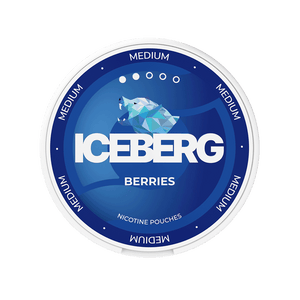
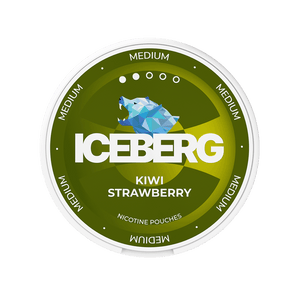
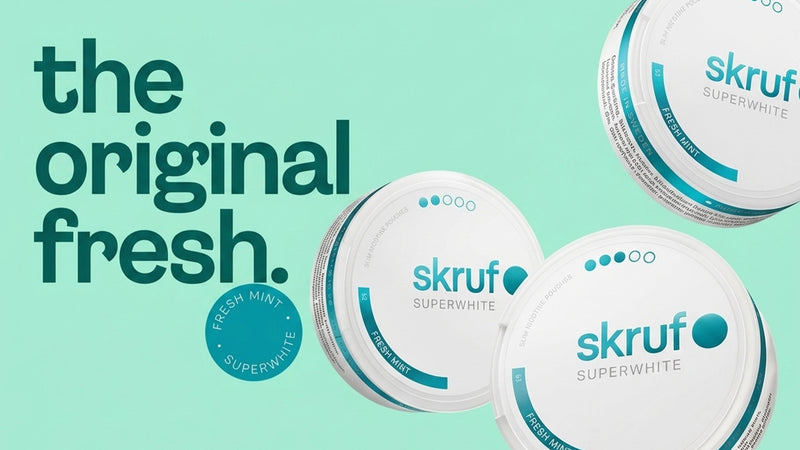
Our most popular Nicotine Pouches with nicotine salt:
But that also has a downside. Because high concentrations in salt form are so well tolerated, correspondingly high amounts of nicotine per Pouches are also possible. According to an analysis by the German Cancer Research Center (DKFZ), using nicotine pouches with 30 milligrams of nicotine per Pouches in one study even led to higher nicotine absorption than smoking a cigarette.3 So the pleasant tolerability of the salt form says nothing about the actual amount of nicotine absorbed – quite the opposite, it can tempt you to consume more without feeling it as intensely in the same moment as with free nicotine.
If you'd like to dive even deeper into the topic, you can find more detailed information in the article “Nicotine Salt, Free-Base Nicotine, and Resinate”.
Nicotine resinate (nicotine polacrilex) – controlled release
But what if the fast, intense effect of free-base nicotine or nicotine salt is too much for you – and you would prefer a gentler, more controlled absorption? This is where nicotine resinate comes in. With nicotine resinate, referred to pharmaceutically as nicotine polacrilex, nicotine is bound to an ion-exchange resin – specifically to a polacrilex potassium resin that holds the active ingredient like a sponge until it is released.23 Unlike a salt, the binding here is not to a small acid molecule, but to a solid carrier material.
The nicotine is only released when the resin comes into contact with saliva and exchanges nicotine ions for ions from the saliva – gradually rather than all at once.23 So if you chew nicotine gum, for example, you trigger this exchange through chewing. With lozenges, it is stimulated by the slow sucking process. The result is a fundamentally different effect profile compared to free base or salt. The nicotine level rises slowly and gradually, guided by your own consumption behavior, such as how often you chew. A pronounced nicotine rush does not occur – and that is very much intentional with this form.
Traditionally, nicotine polacrilex is found in nicotine gum and lozenges from pharmacies, which are used as Medium for smoking cessation.8 In the meantime, some tobacco-free Nicotine Pouches also use this form, such as products from Helwit, which are based entirely on polacrilex, or products from NOAT, which combine nicotine polacrilex with free base and also use oat fibers for a more even flavor release.24 If you'd like to learn more about the difference between nicotine polacrilex and nicotine salt, you can find more answers in the article “Nicotine Salt with Nicotine Polacrilex”.
Take a look at Helwit Snus with nicotine polacrilex:
Special forms of nicotine – nicotine derivatives and 6-methylnicotine
Why have we only talked about three forms of nicotine so far if there are apparently also special forms? That’s because the three forms described so far mainly differ in how the nicotine is chemically present or bound. However, the underlying molecule remains the same. With these so-called special forms, it’s different: these are chemically modified compounds that are structurally similar to nicotine, but form their own distinct molecule.
6-methylnicotine is currently receiving particular attention. The compound has been detected, among other things, in liquids for disposable e-cigarettes. The German Federal Institute for Risk Assessment (BfR) points out that the current data on the addiction potential of 6-methylnicotine is still insufficient and is involved in further investigations into this compound.2 What this means for you in terms of effects and safety cannot yet be conclusively assessed.
The BfR also classifies this from a regulatory perspective: the use of such nicotine analogues can, among other things, be viewed as a possible attempt to circumvent existing regulations for nicotine and tobacco products. The background: many of these rules refer explicitly to nicotine and do not automatically cover chemically related compounds.2 How a product containing a nicotine analogue such as 6-methylnicotine is classified legally always depends on its specific composition and the respective use case.
An overview of nicotine forms
For quick orientation: which form is typically used in which product, and how it is absorbed by the body.

Conclusion: One substance, many effect profiles
Nicotine is and remains the same molecule - regardless of whether it is extracted from the tobacco plant or produced synthetically in the lab. Only further processing changes its chemical form and therefore certain properties. Nicotine can exist as a free base, form a nicotine salt with an acid, or be bound to an ion-exchange resin and exist as nicotine resinate.
These differences are not just a matter of chemistry. They affect how nicotine is released in a product, how your body absorbs it, and how quickly you notice the effects. However, nicotine's fundamental addiction potential remains the same - regardless of which of these forms it takes.
This is exactly why the experience with two products can differ significantly despite a similar nicotine content. The form in which nicotine is present is an important part of the explanation. From the starting material to processing and the finished product, it is a long journey. If you understand what happens chemically along the way, you can better understand why a Nicotine Pouches, an e-liquid, or a nicotine gum can feel different despite similar Nicotine content information. What matters is not just how much nicotine a product contains, but also the form it takes and how it is released.
Sources
- BfR: Gesundheitliche Bewertung von Nikotinbeuteln (Nikotinpouches)(Last accessed on 10.09.2026)
- BfR: 6-Methylnikotin in E-Zigaretten: Unzureichende Datenlage-BfR beteiligt sich an Untersuchung des Suchtpotenzials(Last accessed on 10.09.2026)
- DKFZ – Deutsches Krebsforschungszentrum: Fakten zum Rauchen – Nikotinbeutel (2025)(Last accessed on 21.09.2026)
- William E. Luttrell: „Nicotine", Journal of Chemical Health & Safety, 21(4), 2014(Last accessed on 21.09.2026)
- United States Pharmacopeia. (2021). Nicotine. In USP-NF. Rockville, MD: United States Pharmacopeial Convention(Last accessed on 21.09.2026)
- snuzone.com: Nikotinsalz, Free-Base-Nikotin und Resinat(Last accessed on 21.09.2026)
- Adroit Naturals: Nicotine Salts (Benzoate, Salicylate, Malate & Lactate)(Last accessed on 21.09.2026)
- Drugs.com (2026): Leader Nicotine Polacrilex (gum, lozenge)(Last accessed on 10.09.2026)
- Federal Register (US): Definition of the Term "Tobacco Product" in Regulations Issued Under the Federal Food, Drug, and Cosmetic Act (2023) – dokumentiert die Gesetzesänderung vom März 2022 zur Einbeziehung synthetischen Nikotins(Last accessed on 21.09.2026)
- U.S. FDA: Effects of Increases of Ammonia and Other Basic Compounds on Nicotine (Behördendokument zur Ammoniak-Debatte)(Last accessed on 21.09.2026)
- NPCS Blog: From Waste to Wealth – The Profitable Extraction of Nicotine From Tobacco Waste(Last accessed on 21.09.2026)
- Baharudin, M. R. et al. (2021): Extraction of Nicotine from Tobacco Leaves and Development of Fast Dissolving Nicotine Extract Film. Membranes(Last accessed on 21.09.2026)
- DC Fine Chemicals: Sicherheitsdatenblatt gemäß Verordnung (EG) Nr. 1907/2006 (REACH) – Nicotine(Last accessed on 21.09.2026)
- Toxics (MDPI), 2023, 11(5), 464: Transdermal Nicotine Poisoning: A Rare Case Report of Occupational Exposure(Last accessed on 21.09.2026)
- Bundesministerium der Justiz und für Verbraucherschutz: Chemikalien-Verbotsverordnung (ChemVerbotsV), § 6(Last accessed on 21.09.2026)
- Art. 2 Nr. 4 Richtlinie 2014/40/EU; § 1 i. V. m. § 2 TabakerzG(Last accessed on 21.09.2026)
- Art. 2 Nr. 19 Richtlinie 2014/40/EU (Nikotin = Nikotinalkaloide)(Last accessed on 21.09.2026)
- TabakerzG/TabakerzV, u. a. Höchstgehalt 20 mg/ml, Kennzeichnungspflichten(Last accessed on 21.09.2026)
- Einordnung von Nikotinbeuteln als nicht zugelassenes Novel Food mangels Tabakblatt(Last accessed on 21.09.2026)
- Bundesministerium der Justiz und für Verbraucherschutz: Tabakerzeugnisgesetz (TabakerzG) § 13 Inhaltsstoffe von elektronischen Zigaretten und Nachfüllbehältern(Last accessed on 21.09.2026)
- Gholap, V. V. et al. (2020): An Analytical Perspective on Determination of Free Base Nicotine in E-Liquids. Journal of Analytical Methods in Chemistry(Last accessed on 21.09.2026)
- CN105566288A – High Purity Nicotine Industrial Preparation Method (chinesisches Patent)(Last accessed on 21.09.2026)
- Purolite: Ion Exchange Resins for Active Pharmaceutical Ingredients (APIs) – Technisches Datenblatt zu Nicotine Polacrilex/Polacrilin-Kalium-Harz als Controlled-Release-Träger(Last accessed on 21.09.2026)
- NOAT: FAQs (Produktzusammensetzung – Kombination aus Nicotine Polacrilex und freier Base, Haferfasern für Aromafreisetzung)(Last accessed on 21.09.2026)
- Christen, S. E., Hermann, L., Bekka, E., Vonwyl, C., Hammann, F., van der Velpen, V., Eap, C. B., Benowitz, N. L., Haschke, M., Liakoni, E. (2024): Pharmacokinetics and Pharmacodynamics of Inhaled Nicotine Salt and Free-Base Using an E-cigarette: A Randomized Crossover Study. Nicotine & Tobacco Research, 26(10), 1313–1321(Last accessed on 21.09.2026)





Leave a comment